
Tracing a Culpeper County Chain Backward
Every Culpeper County chain search starts at the newest known transfer. Read the grantor's name there. That prior owner becomes your next target. Search for them as grantee in a still earlier deed. Repeat the cycle until the online index ends or the parcel description stops matching. Remember that each row here is a research step. It is not a claim about one property's history.
| Transfer date | Grantor to grantee | Instrument clue | Reference |
|---|---|---|---|
| Date shown on newest record | Prior grantee → current grantee | Most recent deed | SRA party entry and instrument reference |
| Date shown on earlier deed | Earlier owner → prior grantee | Deed or fiduciary deed | Search prior grantee in the index |
| Date on the historic book page | Historic grantor → grantee | Deed-book entry | Library microfilm or Clerk copy |
Log every instrument you touch. Names alone will mislead you. Compare acreage, adjoining owners, and the full legal description across each deed before linking two records to the same parcel. The land description is the anchor that keeps an old transfer tied to the modern parcel, and this chain-building step connects former owners of a Culpeper County property across dated records.
Culpeper County Former Owner Index Depth and Images
Virginia SRA offers an index-only public view wherever the local Clerk enables it. Deed images need a subscription. The Clerk authorizes that subscription, and fees may apply. Treat the index as a starting point, not a full chain. An absent image does not mean the instrument was never recorded.
When a party entry appears, save the reference. Ask the Clerk for the image or a counter copy when the legal description is needed. If the index stops short of the transfer in question, shift to the deed books and microfilm instead of repeating the same name search without a date or land clue.
The Clerk's office sits at 135 W. Cameron Street in Culpeper. Public hours run 8:00 a.m. to 4:00 p.m. Land-recording submissions stop at 3:30 p.m. In-person, mail, and e-recording channels are listed for new instruments. A copy request is separate from filing a deed. Give staff the parties, an approximate year, and parcel.
The Virginia SRA land-record page explains the access model local Clerks use.
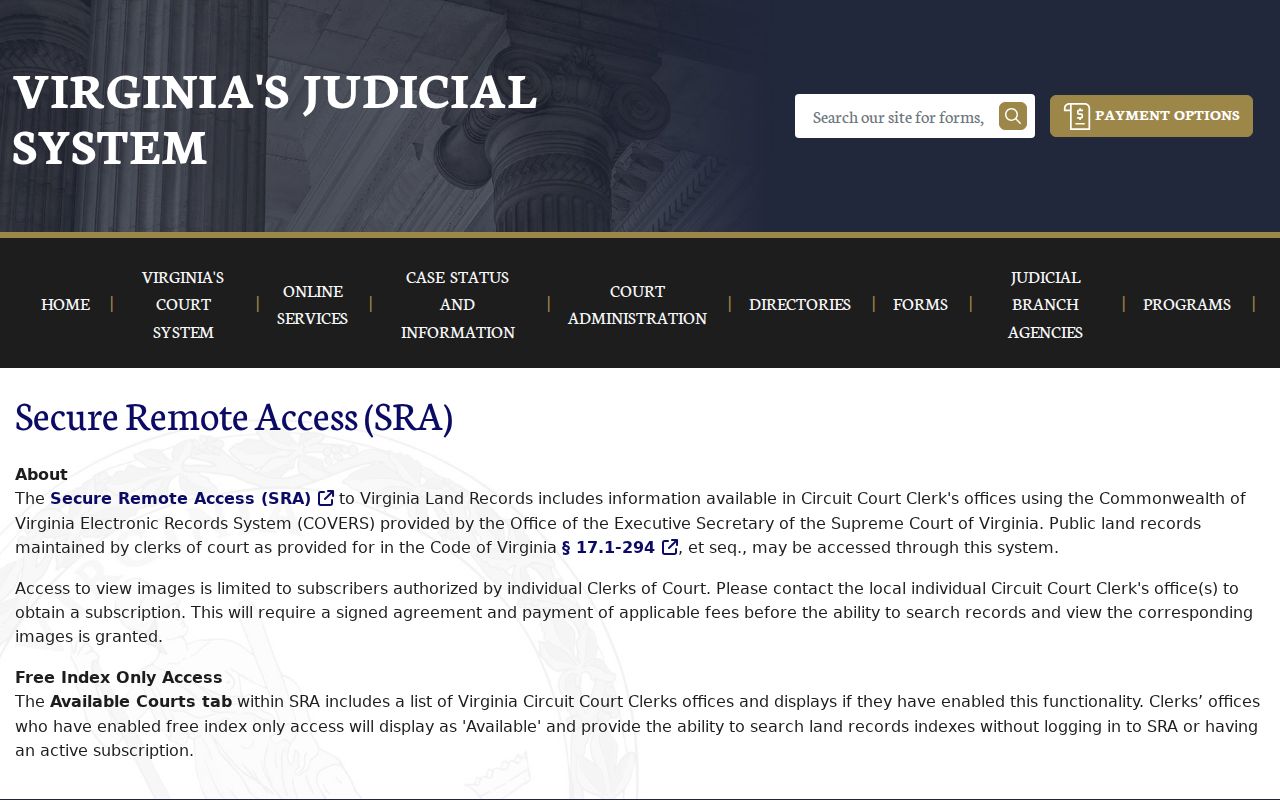
Work the index first to spot a likely deed, then read the full instrument before you add it to the chain of title for any Culpeper County parcel.
Culpeper County Library Deed Books
The Julie Bushong Local History Room holds deed books on microfilm from 1749 through 1864. Will books run 1749 through 1868. Marriage registers span 1781 through 1897. Local newspapers date from the late 1890s. Everything is reference-only and onsite at 271 Southgate Shopping Center in Culpeper. Microfilm printing costs $0.25 per page.
Start with the known parcel or last confirmed owner. The year and name index points to a likely book. Note every party, acreage, watercourse, road, survey call, and adjoining owner. That detail links an early description to a later deed or subdivision plat. It works even when former owners used different street names or lot labels.
The Library's Local History Room page lists the holdings and research resources.
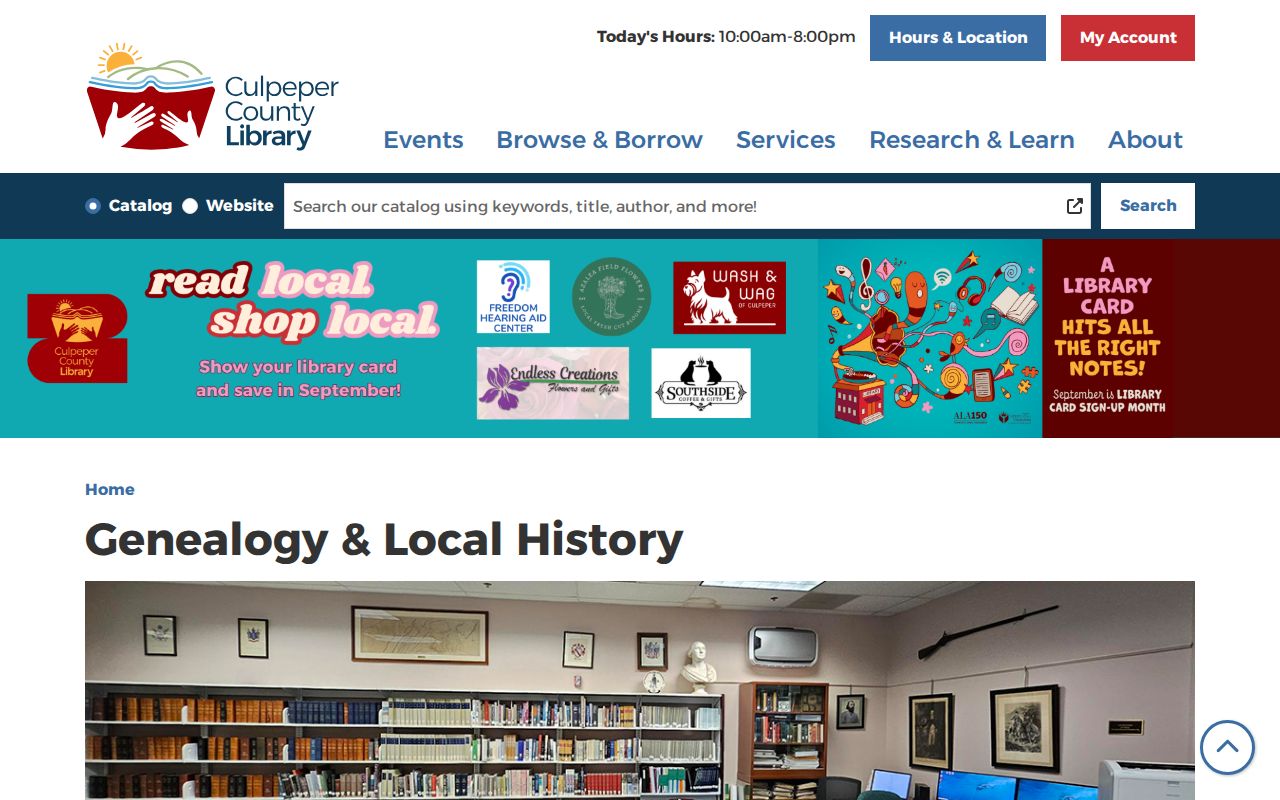
The library's long book run makes it a natural next stop. Head there when web images stop short.
How Culpeper County Deed Parties Connect
A grantor transfers an interest; a grantee receives it. The roles flip over time. Today's grantee appears as a grantor in the next deed back. Search each party in both roles. Record the instrument type and date. Check that the acreage, lot, or adjoining owners still describe the parcel under study, and expect trusts, estates, and companies to make a Culpeper County chain less direct.
- Find the newest deed tied to the parcel and note the grantee, grantor, date, and land description.
- Search the grantor as a grantee to locate the earlier acquisition.
- Repeat with the prior grantor, checking acreage, roads, streams, and neighboring proprietors.
- When the online index ends or fails, ask the Clerk and continue in the deed books or microfilm.
- Grantor / grantee
- The party who conveys / the party who receives the described interest.
- Chain of title
- The ordered record of transfers tied to one parcel over time.
- Legal description
- Land wording that may name lot, acreage, metes and bounds, roads, or adjoining owners.
Culpeper County Former Owner Probate Transfers
An owner's death can create a transfer path that looks nothing like a sale. Probate explains many of them. The Circuit Court Clerk's probate file may hold a will, an order appointing an executor or administrator, and a fiduciary deed or distribution record where open. Search the deceased owner in the assessor and SRA. Look for an executor's deed next. A death certificate confirms the event but transfers no title. Virginia Vital Records limits recent certificates. The public opening period is 25 years for death records, and a trust, LLC, or joint tenancy can keep a parcel out of probate entirely. Read the instrument that records the interest.
Name Variants in Culpeper County Deeds
Former owners hide behind initials, married names, corporate suffixes, trustee language, and fiduciary roles in Culpeper County deed records. Search the spelling variants. Search both party roles too. Compare the land description before connecting two entries, because a shared surname alone cannot tie different deeds to the same person or parcel.
Companies add their own wrinkles. Virginia SCC's entity search shows filing history and a registered agent for a corporate owner. When a trust held the land, the trustee may be indexed instead of the trust's short label. The clues help, with limits.
Historic Culpeper County Property Plats and Adjoining Owners
Some old deeds describe land by a road, a creek, an adjoining proprietor, or an acreage figure rather than a street number. Pair those descriptions with a plat or a later conveyance to pin the parcel down. County Planning keeps approved plats digitally. Older paper sheets are being scanned, though the county describes its collection as incomplete. When Planning lacks a sheet, ask the Circuit Court Clerk for the recorded copy.
Newspaper notices are another thread worth pulling. A sale, subdivision, or property description in print can point you toward the right deed entry. The local newspaper holdings begin in the late 1890s. For a single deed copy or an SRA image, the Culpeper County deed records page explains the mechanics.
Town history adds a time clue for former-owner work. The original plan expanded north and south in 1822. The Town incorporated in 1834. The railroad arrived in 1853. Dates like these help place an old lot or road reference in context, but they will not name a prior owner. That connection comes from the deed parties and the land description itself.
Time Depth in Culpeper County Ownership Records
The county publishes no official cutoff year for its online SRA coverage. The County Library offers an offline route instead: deed-book microfilm covering 1749 through 1864. Will books run from 1749 through 1868. Marriage registers span 1781 through 1897. These collections can extend an ownership chain past where an online index stops, though you still need to identify the correct volume and party index.
Research limit. The earliest SRA year was not verified. Older ownership work can continue through the Clerk or Library, but a deed search is not a title opinion and must not be used to harass a living person.