
The Culpeper County Owner-of-Record Card
Vision e-Assessor gives Culpeper County a quick way to pull the present tax-roll owner. The county supports owner, address, and tax-map searches. It also publishes owner, acreage, and real-estate assessment data through the system. Labels on the live site can change. Treat the fields below as your checklist. Then, when timing matters, weigh the owner name against the latest recorded conveyance.
| Owner name | Name shown on the tax assessment roll |
|---|---|
| Mailing address | Address used for county tax correspondence |
| Situs address | Physical location attached to the parcel |
| GPIN / tax map | County key for returning to the same parcel |
| Assessment date | Effective cycle or data date shown on the roll |
| Deed reference | Check the Clerk’s index for the newest recorded instrument |
An owner of record is simply the name tied to a public assessment account. It says nothing about who lives on or manages the land. The mailing address works as a notice destination. Even so, it may point to an entity, a fiduciary, or an attorney. It may also point to a second home.
Culpeper County Roll Snapshot Dates
Culpeper County's assessment notice fixes the current general roll from January 1, 2025. It runs through January 1, 2027. Vision ownership and property data run through December 31, 2025 where inspections occurred. That published cutoff explains why the current owner field can trail a fresher deed. So check the card's date against the recording date of any later instrument. The county Vision search links address and owner searches straight to the parcel record.
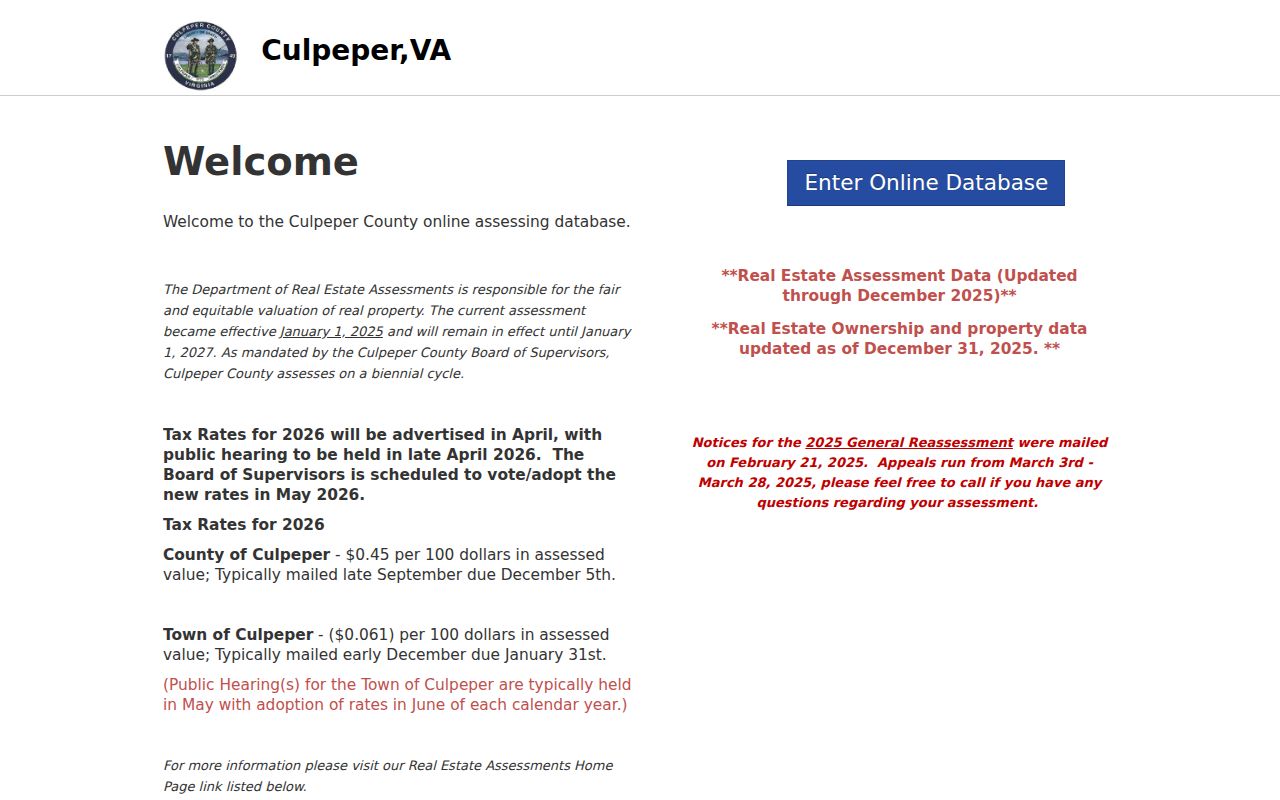
Carry the GPIN from that result forward so any later Clerk record matches the same tract.
Culpeper County Current Owner Address and GPIN Fields
A current owner review works best with three fields side by side. The situs address locates the land. The mailing address is where Culpeper County sends tax correspondence. The GPIN identifies the tax parcel itself. A rural route can make one field look inconsistent. A changed 911 number, or a mailing city outside the Town boundary, can do the same.
Use situs and the GIS map to find the physical parcel. Then plug the full GPIN into the Treasurer inquiry. The Treasurer requires the parcel key's spaces entered exactly. Neither address shows who occupies the property today. An old property number or lot name can complicate things. The deed's legal description settles the match.
Checking the Current Owner in Culpeper County
The newest recorded deed is what you compare against the tax-roll owner. Start with the assessment card. Then find the latest deed through Virginia SRA. Or ask the Clerk for an image or counter copy. Read the grantee and the legal description closely. If the record predates a recent sale, search again under both grantor and grantee. Ask whether a newer instrument is indexed. The Clerk publishes no stated cutoff year for its web index.
- Open the parcel in Vision and record its owner name, GPIN, mailing address, and situs address.
- Search the Circuit Court Clerk index by the owner as grantee and by the prior owner as grantor.
- Compare the deed’s parties, recording date, legal description, and parcel reference with the assessment card.
- Ask the Clerk for the image or local record range if the index has no recent result.
The Culpeper Clerk accepts in-person, mail, and e-recording filings at 135 W. Cameron Street, 540-727-3438. Posted hours run 8:00 a.m. to 4:00 p.m., with land-recording submissions cut off at 3:30 p.m. E-recording files an instrument. It is not a copy-order path. For a copy or counter search, bring the parties, the likely date, the parcel key, and any instrument reference you have. Ask the Clerk about current copy terms before ordering.
- Owner of record
- The name in the assessment roll for a tax parcel.
- Vesting
- The way the deed states the interest is held, such as an individual, trustee, or company.
- Recording lag
- The time between a filed deed and the next public roll update; exact local timing is not published.
- Tenancy
- The deed’s wording for how multiple named grantees hold an interest; check the instrument for its terms.
- Registered agent
- The contact named for a company’s official notices, not proof of parcel ownership.
Culpeper County Current Owner Entity and Fiduciary Names
The current tax-roll owner may be an LLC, trust, estate, trustee, executor, or administrator. Search the exact grantee name on the deed. Include company suffixes and fiduciary language. Virginia SCC's Clerk's Information System adds context on entity status. It also covers registered agent, principal office, and filings. An agent's address is not the parcel location. It is not proof the agent owns the land either.
A trust may appear under the trustee name, the trust name, or both. An estate may list a personal representative. If the assessment card shortens the label, compare it with the recorded vesting language. For the full method from address to evidence, see Culpeper County ownership records.
A parcel record can also show a fiduciary or a life interest. The record may not list one person holding every right. An executor, trustee, or life tenant may sit in the chain. A later deed may name a remainder or successor interest. Preserve the full grantee wording and recording reference. A brief owner label on the tax roll can drop that legal structure.
When a New Culpeper County Deed Appears
A newly filed instrument can outrun the roll. Search Virginia SRA using the parties' names. Then compare the recording date, grantee, and parcel description with the assessment card. The Clerk publishes no cutoff year for its index. Nor does it publish the exact lag between a closing and the next roll update. If the index misses a recent transfer, ask the Clerk whether the record is still processing. It may be indexed under a different party form, or available only at the counter.
Viewing the deed image may take a local subscriber agreement and fee. Even so, the public index reveals the party and instrument reference. The Clerk can confirm copy options. The Culpeper County deed record page walks through the SRA image and counter paths.
Culpeper County Current Owner Is Not a Clear Title Finding
The latest grantee name on a Culpeper County deed answers a narrow question. It says who received an interest. It says nothing about whether earlier transfers hold up, or whether a lien, easement, assignment, or pending court case now clouds the parcel. The Clerk's land records carry the full chain, and a serious purchase review works through that chain plus every encumbrance attached to the property. An assessor card helps confirm the match. It is not a title search. Other county offices add useful pieces. Planning may hold a subdivision or site-plan file. The Treasurer can show a ticket balance. Context helps, but none of it replaces the deed itself. When legal certainty matters, a title company or attorney should review the whole record trail. Watch the dates on the tax card. A date there reflects assessment data, not a parcel-by-parcel certification that the named person still owns the property. Culpeper County reported assessment data through December 31, 2025, covering its January 1, 2025 to January 1, 2027 cycle. If a transfer was recorded after that point, the newest deed confirms the grantee while the tax roll catches up.
Using a Culpeper County Mailing Address
A mailing address on Culpeper County property records shows where the tax notice goes. It is not proof of where someone lives. The field may hold a business, a trustee, or an attorney. It may hold any other address supplied for correspondence. Virginia's Address Confidentiality Program even lets protected participants use a substitute address for this reason. Keep private details out of public summaries, and send record questions to the proper custodian.
Lawful use. Use an owner name for property diligence or a legitimate records question. Do not use a mailing address to stalk, threaten, or harass anyone.