
Three Culpeper County Property Value Measures
One property record can hold three value figures. These include a tax assessment, a sale amount, and split land and improvement totals. The county's public assessor summary confirms the real-estate tax-value assessment. Field labels and sale-history detail can vary on the parcel card. Keep each number tied to the record that produced it.
| Value | What It Is | Where |
|---|---|---|
| Assessed value | County real-estate tax value for the active cycle | Vision e-Assessor |
| Market appraisal | Independent estimate for a specific valuation purpose | Licensed appraiser; not a deed field |
| Recorded consideration | Amount or terms stated in a transfer instrument, if any | Circuit Court Clerk deed |
| Land / improvements | Potential component fields on a parcel card; confirm exact labels live | Assessment card |
Culpeper County values a parcel for tax purposes on its own reassessment cycle, and that number serves the tax roll rather than the open market. A deed's stated consideration may reflect a gift, a family transfer, a partial interest, or other terms that say little about what a buyer would pay. Virginia Code §58.1-3331 opens the door to assessment cards and methodology details, so an owner of record can dig into how the appraisal was built. Even so, no field on the assessment rolls over into a current market appraisal.
Culpeper County’s 2025 to 2027 Value Cycle
Culpeper County's current general assessment took effect January 1, 2025. It runs through January 1, 2027. The county says ownership and property data were updated through December 31, 2025 where inspected. Keep those dates beside any amount you compare. A recent deed may have been recorded after the roll snapshot. The cycle gives a stable tax value for the period. It is not a daily market update. When a deed and the roll show different names or timing, compare the GPIN. Compare the legal description too. Then verify the recorded deed with the Clerk. The county assessment landing page lists the active cycle and links to the assessor. Open the Vision e-Assessor property record to locate the parcel and view its assessment fields.
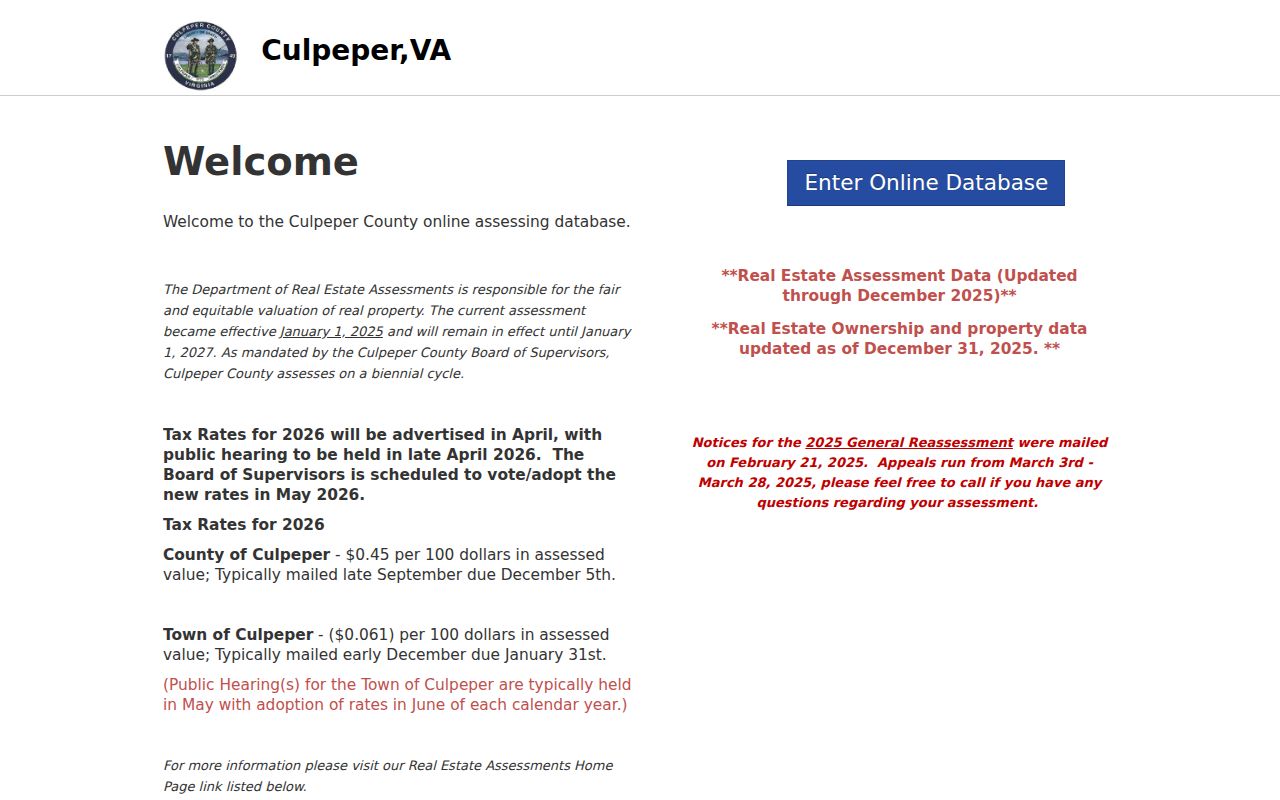
Note: Write the cycle date beside the displayed amount before comparing either figure with any later transaction.
Land and Improvement Values in Culpeper County Property Records
A parcel card may separate land from buildings or other improvements. Vision field labels can differ from card to card. When those amounts appear, note the date and the total along with each part. A change in one component can reflect assessment data or a revaluation. It does not by itself prove a construction permit or a recent sale. The county FAQ lists acreage, owner, zoning, and the real-estate tax-value assessment among its assessment information. Town properties sit inside the countywide e-Assessor too. Use the GPIN to identify the parcel. Real Estate Assessments can explain the card's methodology or property characteristics.
Finding a Culpeper County Assessment Value
Use the county Vision e-Assessor to find the parcel. Search by address, owner name, or tax map number. Write down the GPIN and the assessment date beside the amount. Note the land value, the improvement value, and the total if the card splits them. Field labels and sale-history detail vary. So read the current parcel card rather than assuming it shows a recent transaction.
- Search Vision by situs address, owner name, or GPIN.
- Copy the assessed value, parcel key, and cycle or data date that the record displays.
- Use the deed index to find the latest transfer and read the consideration language, if included.
- Compare like records and dates; do not treat the tax value as a sale appraisal.
- Assessed value
- The county value used for real-estate tax administration during the stated cycle.
- Market appraisal
- An estimate of value prepared for a defined purpose by a qualified appraiser.
- Consideration
- The price or other value stated in a recorded transfer, which may not equal market value.
- Reassessment
- A new county valuation cycle; Culpeper’s active cycle is identified in its official notice.
Recorded Sale Value in Culpeper County Property Records
A recorded deed is where a transfer and its consideration language belong. The number in a deed may state an actual sale price. It may instead show nominal consideration, a gift, a family transfer, or a partial interest. Deed consideration is not always the open-market price. A deed of trust amount is secured debt, not sale value. Search the Circuit Court Clerk's grantor-grantee index. Review the instrument image when transaction terms matter. SRA may offer a free index, while images require local Clerk authorization and fees. The assessor card may show a sale history. Check its date and amount against the recorded instrument itself.
Culpeper County Property Value Assessment Methodology
Virginia Code §58.1-3331 opens real estate assessment cards to the public. A card shows the land and improvement details that support Culpeper County's number. It is not an appraisal. Ask Real Estate Assessments which method and source data stand behind a parcel's figure rather than treating the assessment as a sale price. That distinction matters.
A sharp request starts small. Identify the GPIN and the effective assessment date. Then ask which card entries and which valuation method support that figure. The county publishes no countywide ratio or neighborhood-level market series. Keep any method explanation tied to the parcel and cycle it concerns, since a rule that fits one Culpeper County property may not fit its neighbor.
The local review deadline changes. So does the appeal form. The assessment office answers questions about contesting a tax number, and the bill and appeal process is laid out on the Culpeper County property tax records page.
No countywide sale-to-assessment ratio exists here. No measured value trend exists either. Avoid deriving a market price from an assessment or comparing parcels from different effective dates without noting the cycle. A methodology request can still ask the office which card fields and valuation method support the tax figure. That is distinct from an independent appraisal.
Culpeper County Assessment Values for Town Parcels
Town parcels sit on the county assessment cycle. The Town sets its own tax rate. Culpeper County's page has shown both county and Town rates, though budgets can change the numbers. Confirm the current rate before calculating a bill. A different rate changes the tax math, not the parcel's assessed value or recorded sale price.
Downtown offers a historic land-use lens. The Town map names MX and NX districts plus a Historic District Overlay, and railroad-adjacent mixed-use property sits inside that frame. Zoning and overlay review can shape redevelopment questions. No verified neighborhood sales trend backs an appreciation claim, so treat the lens as context.
The Town map adopted October 14, 2025 keeps its layers distinct. The Historic District Overlay dates to December 9, 2003. The PUD Overlay dates to May 9, 2000. A parcel can carry a base district and an overlay at once. Those designations are planning controls that may affect how a buyer weighs possible use, but they are not a sales comparison or a promise of value.
What a Culpeper County Assessed Value Cannot Say
An assessment guarantees nothing about a sale price. It will not predict a buyer's offer or the later value of a specific feature. Culpeper County produces it for tax administration, often on a cycle rather than a live sale. A recorded deed can show a transaction reference. Yet the consideration may be nominal or reflect a gift, related parties, or a partial interest. For market value, use a licensed appraisal.
Value vs. price. A Culpeper County assessment is a tax figure, not an estimate of what a property would sell for today. Use a licensed appraiser for a market valuation.